Blog · Programme management
Why external IT partners often fail (and how to prevent it)
Three failed suppliers in a row is rarely down to bad suppliers. It starts with the selection and the agreements. Here is how to get it right.
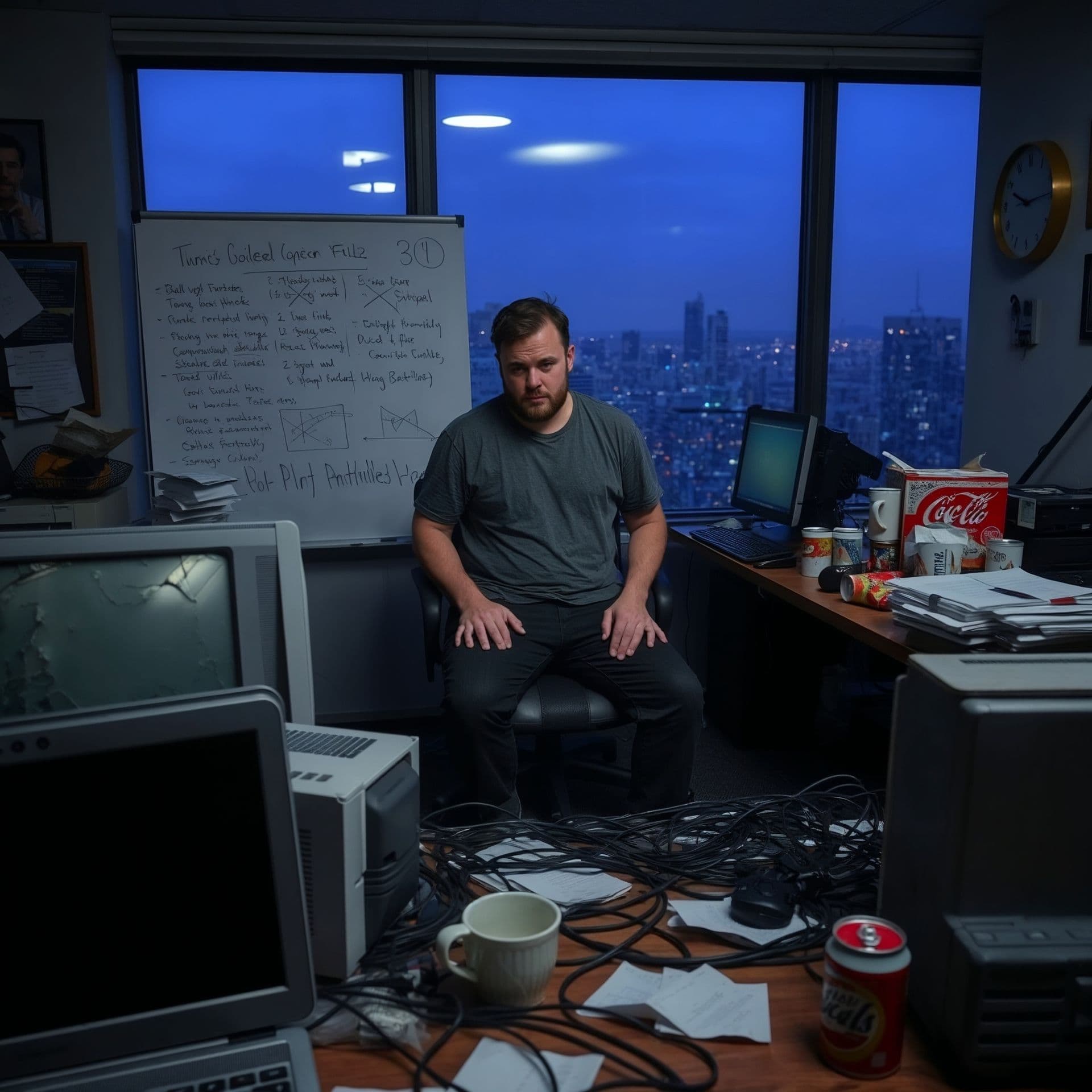
An SME in Mechelen had just had to part ways with its third IT supplier in a row. Frustrated, the CEO asked:
'Walter, how is it that we keep ending up with the same problem again and again? They promise the earth and deliver a pile of rubble.'
We hear this story too often. And while it's tempting to blame the suppliers, the real problem usually lies earlier in the process: in the selection and in the agreements. Both sides share responsibility for what goes wrong afterwards.
The pattern we keep seeing
Three suppliers in a row that follow the same pattern: an enthusiastic start, cracks halfway through, a crisis at the end. Companies blame the suppliers, but the pattern tells a different story. When three different parties deliver the same result, the problem lies in how the game is played, not just in who is playing it.
Four reasons why IT partnerships often fail
Unclear expectations from day one
'We want a system that can do everything.' You hear this sentence regularly in intake meetings. The problem? 'Everything' means something different to everyone. The supplier is thinking of a standard solution with some configuration, while the client is dreaming of a made-to-measure Ferrari. Both set off with a different picture in mind, and that difference only surfaces weeks later in a meeting where suddenly nobody understands what the other side means.
Communication that doesn't add up
IT people speak a different language from business people. Where the supplier talks about 'API integrations' and 'middlewareThe intermediate layer that lets systems talk to each other.', the client is thinking 'just get them to work together'. That translation regularly goes wrong. Not out of unwillingness on either side, but because there's nobody whose explicit job it is to speak both languages and connect them.
Budget versus reality
We see it too often: suppliers who deliberately bid too low to win the contract, hoping that extra work will later make up for what they're underpricing now. And clients who think complex systems can be built for next to nothing. That combination of wishful pricing on both sides is a ticking time bomb.
Lack of ownership
Both parties pass responsibilities back and forth. The supplier says: 'The client delivers the input too late.' The client says: 'They should have seen this coming.' Meanwhile the project grinds to a halt. Without someone watching over the whole, every large project runs aground on this.
Our role at Make IT So
Jan and I founded Make IT So out of the conviction that things had to be done differently. We don't act as a supplier but as a gatekeeper: someone who defends the client's interests towards all the parties involved. We're on our clients' side, not on the side of the suppliers. Most problems arise because there is no neutral party to safeguard the agreements, translate the communication and centralise ownership. If nobody fills that role internally, we step in.
Concrete signs that your supplier is going to fail
Three phases we see time and again:
- Weeks 1-4: The honeymoon. Everything seems to be going smoothly. Lots of meetings, lots of optimism, little concrete output. This is the phase in which scope creepThe unnoticed expansion of a project until it becomes unmanageable. quietly sets in.
- Weeks 5-12: The first cracks. Demos become vaguer. Extra work is announced. The project schedule starts to slip. If you don't step in here, things go badly wrong.
- Week 13+: The crisis. The budget has been overrun, and so has the schedule, and the supplier points at the client while the client points at the supplier. By this point it's often too late to rescue the project without heavy losses.
Recognise this pattern? Then it's time to intervene, not to wait until everything grinds to a halt. Stepping in early is harder emotionally (you've already invested), but 80% cheaper.
How do you avoid these pitfalls?
- Start with a thorough intake. Crystal-clear agreements on what is expected. What's in scope, and what isn't? What counts as a successful delivery? Which user groups will have to work with it? Take the time to talk everything through at a high level before a single line of code is written.
- Appoint a neutral gatekeeper. Someone who has no financial interest in making the project bigger, but who does have the expertise to safeguard quality. Internally, this can be an experienced project managerBringing one clearly defined undertaking to a result within scope, time and budget.; externally, it's a role we regularly take on.
- Phased payments with milestones. Never pay everything up front. Link payments to concrete, delivered functionality, not to time spent. That alone prevents a great deal of scope creep.
- Weekly meetings with concrete deliverables. No vague updates along the lines of 'we're making good progress', but concrete demos of what was delivered that week. If the demo can't go ahead, that is the status in itself: nothing concrete has been delivered.
- A plan B from day one. What happens if the supplier drops out? How do you take the project over? These questions may seem negative, but they force clarity about who owns the code, the data and the documentation. Not an unimportant point in the contract either.
The human side of IT partnerships
Technology itself is rarely the problem. It's about people who have to work with other people, and that is often where it goes wrong. Suppliers are under pressure to win contracts and sometimes stay on a project longer than is healthy. Clients are frustrated by budget overruns and delays, and out of that frustration they push harder than is helpful.
At Make IT So we try to be the bridge. We speak both languages: that of the business and that of IT. We understand the pressure on suppliers, and we understand the frustration of business leaders who are faced with overruns. Everything comes right with time and honest communication. Provided everyone is willing to take responsibility, of course.
Having doubts about your current IT partnership, or facing a new selection? A second opinion from an independent party that guides your digitalisation always costs less than the three months of crisis you risk without that second pair of eyes.