Blog · Programme management
When suppliers fall out of step: why coordination matters in digital projects
Find out why digital projects stall when suppliers lack overall coordination, and how Make IT So, as the partner that connects them, brings clarity, peace of mind and efficiency to everyone involved.

Recently I spoke with the founder of a supplier, and our conversation reminded me once again how complex digital projects can be these days. Not on the technical side, where many firms are excellent, but on the organisational side.
He told me about his biggest challenge when he works for the same client alongside several other suppliers. What struck me was how familiar his story sounded.
The reality: everyone has a schedule, but nobody sees the whole picture
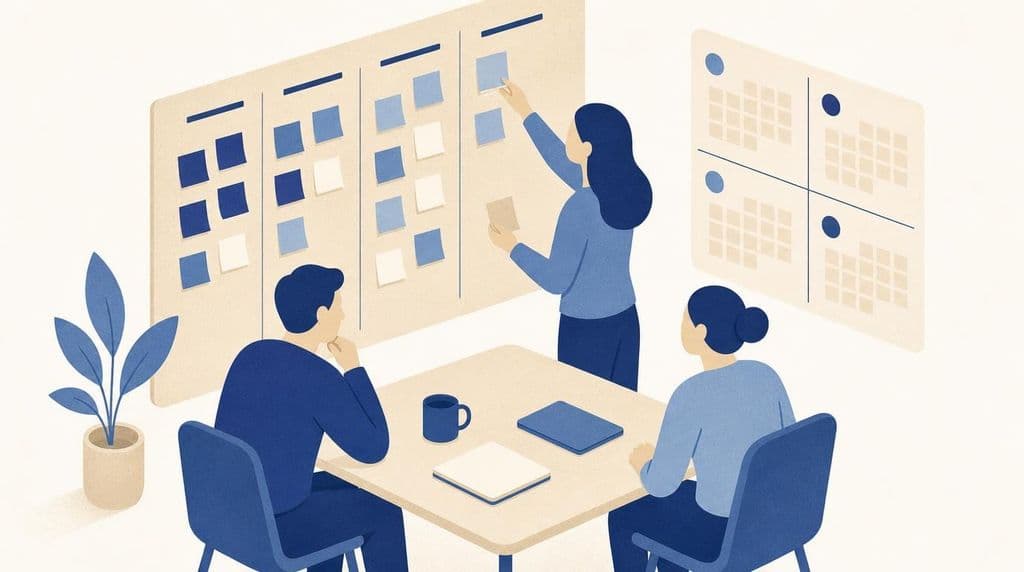
In many organisations, several suppliers work together: a digital partner, a marketing agency, a developer, a UX specialist, a copywriter, and so on. Each has their own project managerBringing one clearly defined undertaking to a result within scope, time and budget., their own way of working and, above all, their own schedule.
And although each of those schedules may be perfectly sound in its own context, one big problem often arises: they don't line up with one another.
Not because anyone doesn't want them to.
Not because anyone is doing a poor job.
But because nobody has the mandate or the overview to align all the roadmaps with one another.
The client expects the suppliers to work well together. But it isn't a given that the client, who is mainly focused on the business, strategy and internal priorities, can also take on the role of coordinator. Nor should they really have to.
The missing link: a partner who connects the schedules
During our conversation I told the owner that this is exactly where Make IT So regularly steps in.
We know the language, the approach and the roadmaps of different kinds of suppliers. We understand how their work fits together, and in what order things need to happen to avoid waste and delay.
So we don't take over anyone's work; instead, we connect the pieces of the puzzle.
We make sure everyone knows:
- when something needs to happen,
- what is needed to move forward,
- which dependencies there are,
- and who needs to supply which information or input, and when.
In other words, we create the overview that is so often missing.
The impact: three clear gains
Once the schedules are properly aligned, the dynamic changes for everyone:
1. For the client
There is clarity and peace of mind.
They know when something will be delivered and at which points they need to prepare or supply something themselves. No surprises, no last-minute stress.
2. For the suppliers
There is less waiting around.
They don't have to wait until another supplier has finished, or until some missing input finally turns up. Everyone keeps working smoothly along a shared line.
3. For the project as a whole
There is less wasted money, time and energy.
When everyone works in the same direction and at the same pace, the project becomes more efficient and better in quality.
Conclusion: working together is more than working side by side
Good suppliers deliver good work.
But strong projects only come about when all that work fits together as well.
More and more organisations realise how valuable it is to have a partner who keeps that overview: someone who understands both the client and the suppliers, and who keeps the puzzle manageable.
Because projects don't succeed only through what gets built,
but above all through how we do it together.