Blog · Strategy & transformation
The hidden costs of 'cheap' IT solutions
Four costs that never appear on a quote, yet make every cheap IT choice more expensive than the costly option. Plus: how to see them coming.

'Walter, we've found a fantastic deal. An ERP systemA single system that brings together core processes such as inventory, accounting and orders. for just 15,000 euros. That's half of what other software companies quoted.'
A business owner called me with those words. Normally I'd be pleased for a client who's saving money, but I know this pattern all too well. Six months later he called back. The system that was supposed to cost 15,000 euros had since grown to 41,000, and it still didn't really do what it was meant to do.
Jan always sums it up like this: companies vastly underestimate the cost of digital transformationHelping your organisation work smarter with technology, not as an IT project but as a way of working. projects, and they also underestimate their potential for the future. That is exactly the paradox. The cheap quote feels safe today, but the real cost is hidden in things nobody ever puts on a quote.
Four hidden costs nobody mentions
1. The integration trap
A wholesaler in Antwerp bought software for 8,000 euros. A fine price, until they discovered that the system didn't talk to their other applications: not to their accounting, their online shop or their till system. Each link cost another 15,000 euros.
This is no coincidence. Many suppliers use their main product as bait and only make their money on the extras afterwards. Think of printer manufacturers who make their margin on cartridges, not on printers. The real cost is what you pay for the software, plus integrationThe way systems talk to each other, so you don't have to enter your data twice., plus maintaining those integrations, plus future adjustments whenever other systems are updated.
2. The expertise tax
'Our system is very user-friendly,' you often hear. But for whom? Six weeks in, half the team is still using Excel. Not out of unwillingness, but because the new system makes their work more complex instead of simpler.
One client worked out the productivity loss during a changeover: 18,000 euros over three months, with the team working 40% less efficiently. Add the outside consultants who came in to explain how it all works and you've doubled the budget. Nobody had allowed for this in the business case.
What helps is a three-month pilot with your whole team and real data. A month with dummy data proves nothing. A pilot like that costs 5,000 to 10,000 euros and saves you 50,000 in wrong choices.
3. The scalability snare
'This system grows with your business.' Technically, that's usually true. Financially, it's a different story. An SME in Ghent started out paying 200 euros a month for its CRM. After 40% business growth it was paying 1,800 a month: an increase of 900%.
The problem is that many 'scalable' solutions have a cost structure that rises exponentially, combined with a vendor lock-in that makes switching virtually impossible.
What works is negotiating future prices on day one. What will user 25 cost, or module 10, or integration number 3? Put the scaling paths on paper before you sign.
4. The vendor lock-in premium
The worst case we've seen: a manufacturer in Limburg had to pay 25,000 euros to export its own data, because that was 'in paragraph 47 of the contract'.
Companies stay with poor suppliers for years because the cost of switching becomes too high. These days there are more tools available for migrating data than there used to be, but prevention is still far cheaper than cure. Data export, termination terms and standard formats belong in the contract from the start.
Working out the real cost
Our rule of thumb for SME projects (not for corporate environments): every IT project ends up at 250 to 350% of the original quote. Plan for that on day one. Not because the quote is dishonest, but because no quote covers the four hidden costs above.
Choosing software wisely: the five-step approach
- Talk to the people who do the work. Not just in a formal round of questions, but also at the coffee machine, over lunch and in the corridor. That's where you hear where it really chafes. The formal meeting hears where management thinks it chafes.
- Processes first, software second. Start by documenting how you work now. A client wanted a CRM costing 30,000 euros. After a process analysis, the real problem turned out to be communication between teams. It was solved with a 5,000 tool and better agreements.
- Calculate the total cost of ownership, not the purchase price. Don't ask 'what does this cost?' but 'what does this cost over 3 years, all-in?' That includes implementation (often another 50 to 100% on top), training, integrations, maintenance and scaling. And the cost of not investing.
- Run a real pilot. Three months, the whole team, real processes. No demos with perfect scenarios. Try, evaluate, adjust, try again. Keep getting better, even if it feels slow.
- Write the escape routes into the contract. Data export at no cost. Termination terms. Standard formats. All of this has to be in there before you sign. Negotiating afterwards always costs you.
A success story: ROI thinking in practice
An SME in Brussels was torn between a 'simple' system for 8,000 euros and an integrated solution for 25,000. They chose the more expensive one. Why?
With integrations, the cheap system would have cost 20,000 euros, plus 200 a month for extra features. The more expensive solution automated their invoicing, saving 15 hours a week, or 18,000 euros a year. They saw a return on the investment within 16 months.
Their 'expensive' system pays for itself. The 'cheap' alternative would only ever have cost them money.
Think like an investor, not like a buyer
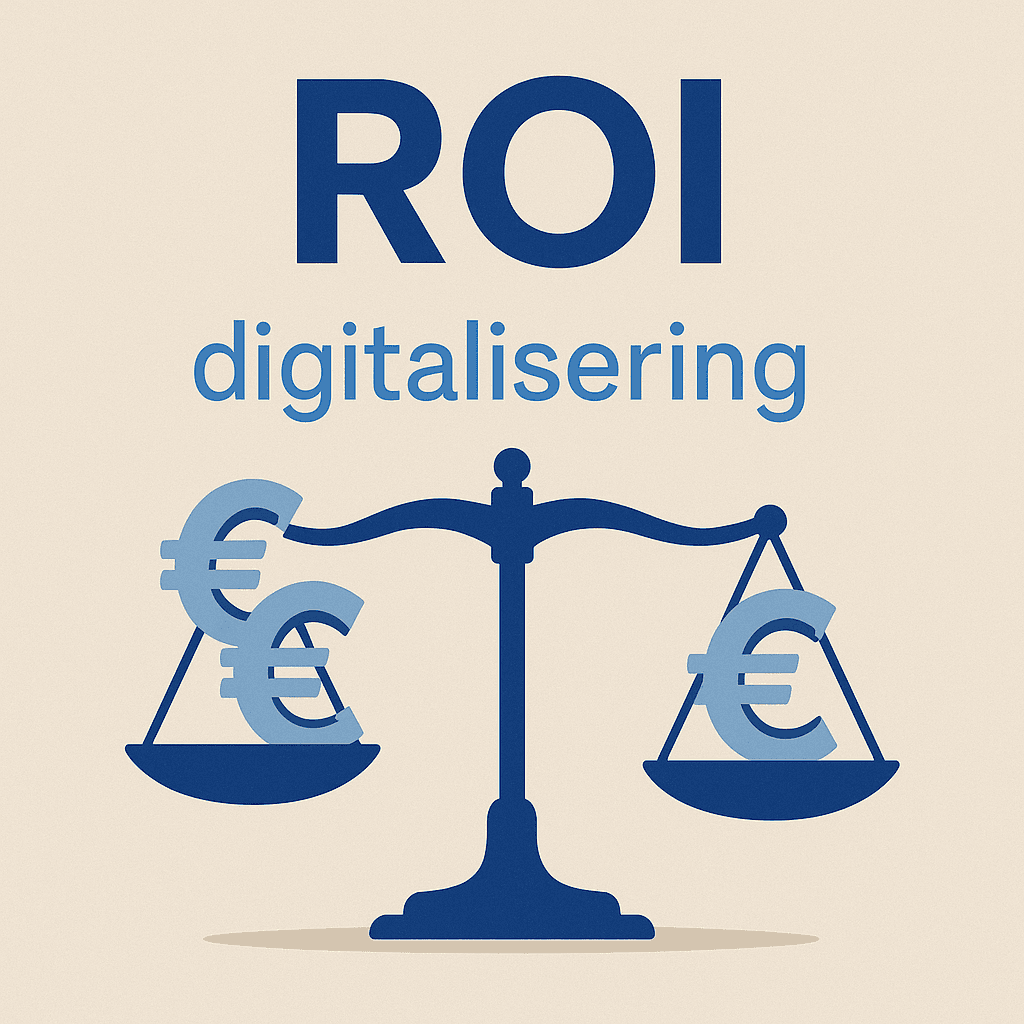
A 30,000-euro system that saves you 50,000 is cheaper than a 10,000-euro system that saves you 5,000. SMEs often look at the outlay today, not the value tomorrow. That's understandable, because today feels more concrete than tomorrow. But it does cost more.
If the ROI is positive but the investment is bigger than expected, there are financing options, phased implementations and leasing arrangements. That's no reason to wait. It is a reason to finance thoughtfully.
One last warning sign
If a supplier pushes you with 'this special price is only valid today', walk away. Good systems don't have an expiry date. The best IT investments are the ones where, two years later, you're still happy with your choice.
Do the groundwork, ask the right questions, and expect that you'll sometimes need more budget than you'd hoped. The alternative, that 'bargain' that turns into a nightmare, always costs more. If in doubt, get a second opinion before you sign. A few days of independent support with your digitalisation costs less than a five-year investment that turns out to be the wrong one.